


Skin cancer checks
We are all at risk from the Sun’s damaging rays and through early intervention and yearly skin checks you can dramatically improve the outcome of this almost entirely preventable disease.
You can feel safe in the knowledge that all our skin cancer doctors are highly qualified in providing you with the best of care, with the latest tools.
Book your skin cancer check today.

Book your annual
check because early intervention
is key.
Early intervention and yearly skin checks
You can feel safe in the knowledge that all our skin cancer doctors are highly qualified in providing you with the best of care, with the latest tools in the fight against skin cancer.



Full Skin Checks
Clinical Assessment
Biopsy and Excision of lesions
-
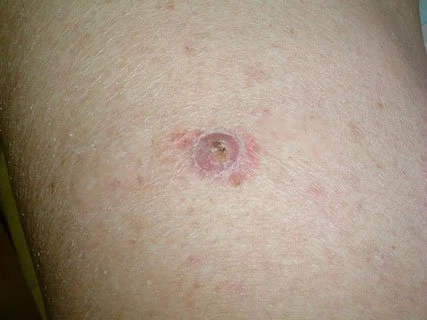
Squamous Cell Carcinoma
Squamous cell carcinoma (SCC ) is a cancer of a kind of epithelial cells, the squamous cell. These cells are the main part of the epidermis of the skin, and this cancer is one of the major forms of skin cancer.
-
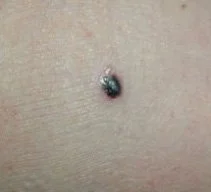
Nodular Type
Nodular melanoma (NM) is the most aggressive type of melanoma. It is most often darkly pigmented; however, some NM lesions can be light brown or even colorless (non-pigmented).
-
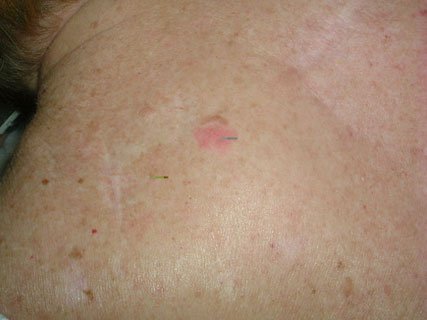
Non Pigmented Melanoma
While uncommon, melanoma occasionally does not have brown or black pigmentation. An uncommon subtype called amelanotic melanoma, this usually appears as a pink or red nodule. Usually mistaken for sun damaged blotchy skin.
-
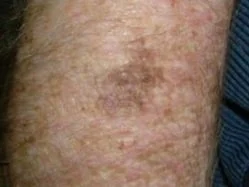
Early Stage (Lentigo Maligna)
Lentigo Maligna melanoma (LMM) typically occurs on sun-damaged skin in the middle-aged and elderly, especially on the face. This melanoma may be mistaken in its early, and most treatable, stages for a benign “age spot” or “sun spot.”
LMM begins as a spreading, flat, patch with irregular borders and variable colors of brown. This lesion is called “lentigo maligna.”This spreading brownish patch may grow slowly for years and is often mistaken for a pigmented sun spot.
-
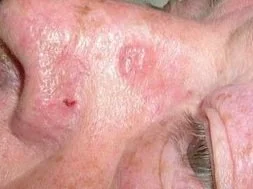
Basal Cell Carcinoma
Basal cell carcinoma (BCC) is the most common skin cancer. It rarely metastasizes or kills. However, because it can cause significant destruction and disfigurement by invading surrounding tissues, it is still considered malignant.
-
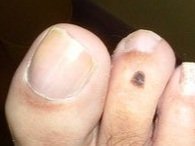
Acral Lentigo Maligna
ALM is sometimes referred to as a “hidden melanoma,” because these lesions occur on parts of the body not easily examined or not thought necessary to examine. ALM develops on the palms, soles, mucous membranes (such as those that line the mouth, nose, and female genitals), and underneath or near fingernails and toenails.
-
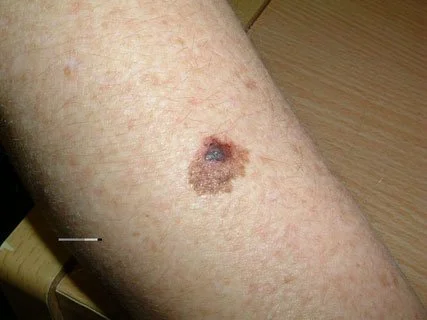
Superficial Type
Superficial spreading melanoma (SSM) is the leading cause of death from cancer in young adults.
A typical lesion has:
• Irregular borders
• Various shades of black, brown, grey, blue, pink, red, or white.
• Within the lesion there can be a variation in color involving white, pink, brown, and black.